MEP engineering for South Florida, Puerto Rico, and the Caribbean — by audience, by discipline.
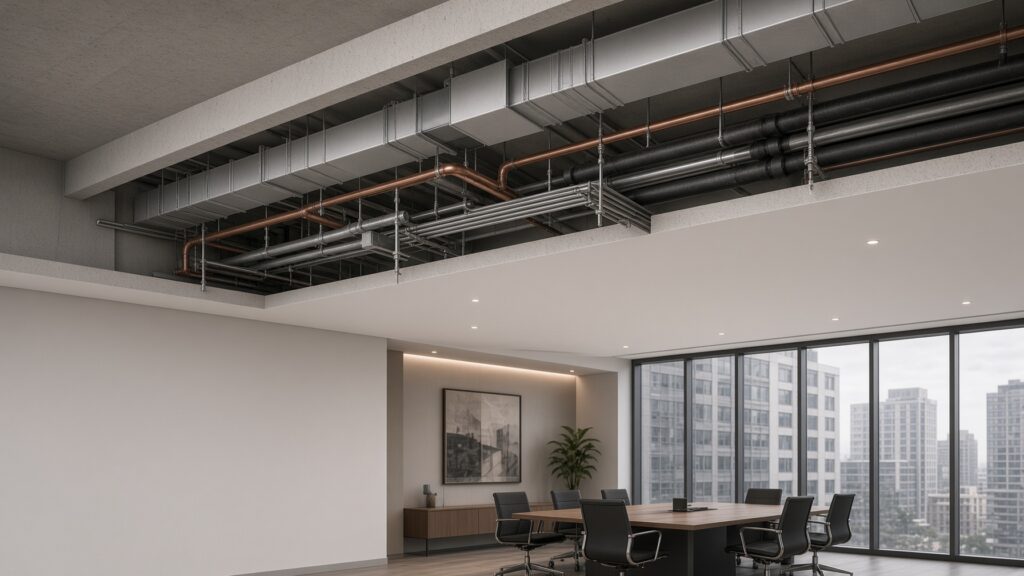
How Do You Protect Ceiling Height When Coordinating MEP in South Florida?
Protect ceiling height by treating the plenum as a schematic-design problem — floor-to-floor, the cooling system, and BIM clash detection — not a field fix. A South Florida coordination guide. (...)
Does the HVAC System or the Building Envelope Drive Utility Cost More?
The HVAC system drives annual utility cost more than the envelope, because a South Florida building is cooled almost every hour and system efficiency sets the cost of each one. The envelope sets the load the system must meet, and unlike the system it is built once. Both are schematic-design (...)
What Building’s MEP Systems Should Be Inspected Before Buying?
Before buying, check the remaining life and condition of a building's MEP systems — HVAC, electrical, risers, life-safety — with an engineer-led PCA, and price it into the deal. (...)
When Should You Replace an Aging Chiller Instead of Repairing It?
Replace an aging chiller when three-year repair costs near half the price of a new unit — or when failures recur, energy climbs, and parts grow scarce. (...)
Does an All-Electric Multifamily Building Pencil Out in Florida?
In Florida, an all-electric multifamily building is usually the more economical configuration. It costs less to build because there is no gas piping, and less to operate because a heat-pump water heater beats gas in this climate. The savings come from the heat pump, not cheap electricity, and the decision (...)
Is WELL Certification Worth It for a South Florida Class A Office? What It Adds to Rent
For a South Florida Class A office chasing corporate tenants, WELL usually pencils — a 4–7% rent premium against roughly a 0.5% fit-out cost. It's a leasing decision first. (...)
How Do You Choose the Right HVAC System for a South Florida Building?
The right HVAC system fits four things at once — the building's size, the climate, the budget, and the architecture. Here's how to decide it at schematic, with the engineer. (...)
How Do Facilities Directors Prepare a Building’s MEP Systems for Hurricane Season in Florida?
You prepare a building's MEP systems for hurricane season before the season — protect what fails first, load-test the generator, and document the shutdown sequence. Here's the June checklist. (...)
Does Resilient MEP Design Lower Insurance Premiums on Florida Buildings?
Resilient MEP design can lower insurance premiums on Florida buildings, because underwriters price the probability of a claim and that probability is set on the MEP drawings. Property insurance rose from under 2 percent of multifamily revenue in 2000 to almost 5 percent in 2024, and the premium now moves (...)
What Are the Most Common MEP Inspection Failures in South Florida, and How Do You Prevent Them?
The most common MEP rough-in failures in Miami-Dade and Broward are field conflicts that passed plan review: condensate drains without slope, electrical panels without clearance, buried cleanouts, and equipment installed without HVHZ product approval. Each is a code requirement the drawings did not fully apply, and each puts the trades (...)
VRF vs. Central HVAC in a Miami High-Rise: What’s the 10-Year Cost of Ownership?
Over ten years, VRF can cost less to own than a central chiller plant in many South Florida buildings. In a large Miami high-rise the central plant usually wins, because part-load efficiency and a smaller footprint outweigh its higher installation cost. Installation is one line on the bid; ownership is (...)